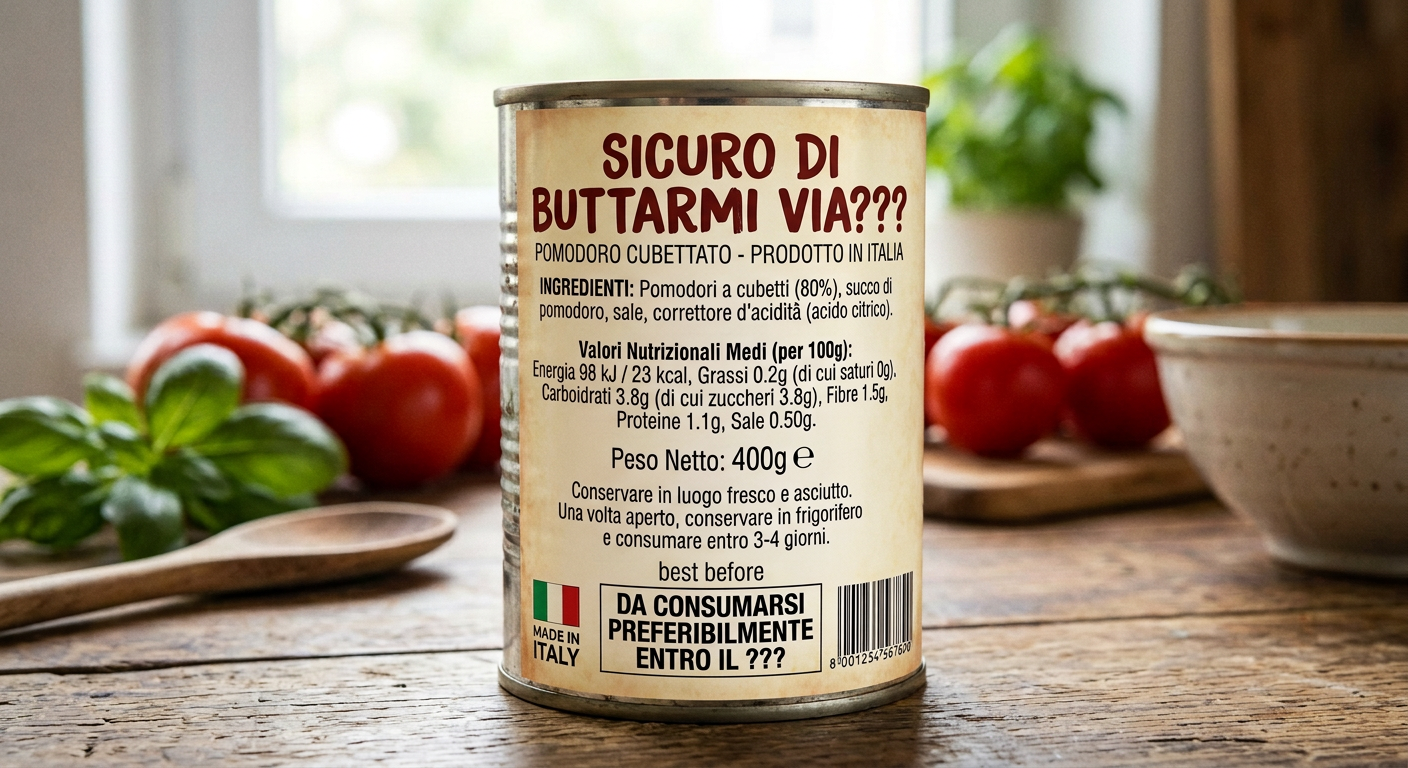
DOC Design ha indicato in oltre 20.000 packaging l’indicazione “da consumarsi preferibilmente entro il…” ma è veramente una data preferibile o solo un’indicazione che rischia di mandare in discarica milioni di tonnellate di cibo, solo in Italia?
I numeri sono da brividi. Nel 2022 il mondo ha sprecato 1,05 miliardi di tonnellate di cibo, pari al 19% di tutto il cibo disponibile per i consumatori: l’equivalente di oltre 1 miliardo di pasti buttati ogni giorno, più di un pasto al giorno per ogni persona che nel mondo soffre la fame. Il 60% di questo spreco avviene tra le mura domestiche. In Italia ogni anno finiscono in pattumiera oltre 5 milioni di tonnellate di alimenti lungo tutta la filiera, per un valore di circa 13,5 miliardi di euro, di cui 7,3 miliardi solo nelle nostre case: circa 79 grammi di cibo buttati al giorno a testa. Lo spreco domestico equivale a 1,7 milioni di tonnellate, cioè 3,4 miliardi di pasti che potrebbero sfamare oltre 3 milioni di persone in povertà.
E una parte rilevante di questo spreco nasce proprio dalla confusione tra le due diciture in etichetta: molti trattano il termine minimo di conservazione come una scadenza assoluta e buttano cibo ancora perfettamente commestibile. Le cause dichiarate dagli italiani — cattiva conservazione (38%), dimenticanza (33%), sovra-acquisto (28%) — si sommano spesso all’eccesso di prudenza verso le etichette.
Avete messo in ordine la dispensa e trovato farina abbandonata, spezie impolverate, vecchie lattine e frutta secca appiccicosa, tutti scaduti da mesi? Non disperate: molti cibi restano commestibili anche dopo la data di scadenza, utile da sapere anche per organizzare spese settimanali più grandi.
La legge europea prevede due etichette diverse:
- “Da consumarsi entro il”: riguarda prodotti che si deteriorano rapidamente (latte, pesce fresco, carne tritata). Oltre quella data il cibo può non essere più sicuro e non può essere venduto.
- “Da consumarsi preferibilmente entro il” (Termine minimo di conservazione): dopo questa data il prodotto può perdere sapore e consistenza, ma resta commestibile senza rischi. Vale per congelati, essiccati, scatolame, olio. Basta conservarlo bene e, se la confezione è integra, annusarlo o assaggiarlo per verificare.
Le etichette indicano giorno, mese e anno per i prodotti che durano meno di tre mesi; mese e anno tra i 3 e i 18 mesi; solo l’anno oltre i 18 mesi. Solo pochi alimenti hanno scadenze fissate per legge (latte fresco: 7 giorni; uova: 28 giorni); per gli altri i produttori indicano date prudenti, quindi si può consumare anche qualche giorno dopo. Ortofrutticoli freschi, vino, superalcolici, sale, zucchero, aceti, pane e dolci da forno, salumi e formaggi da banco non richiedono etichetta di scadenza.
Alimenti che durano oltre la scadenza (se ben conservati; se avete dubbi, annusateli o assaggiateli):
- Uova: commestibili qualche giorno dopo; se galleggiano in acqua sono troppo vecchie, se vanno a fondo sono buone.
- Yogurt: fino a una decina di giorni dopo, con meno fermenti lattici.
- Farina bianca e riso bianco: anni; quelli integrali irrancidiscono in pochi mesi. Controllate che non ci siano tarme nella farina.
- Olio di oliva: minimo 18 mesi dall’imbottigliamento; va a male solo se mal conservato (calore, luce, aria). Gli altri oli durano di più in lattina metallica; teneteli lontani dal piano cottura. Scartatelo se ha odore metallico o consistenza viscida.
- Scatolame (pelati, legumi, tonno): fino a un anno oltre la scadenza se la confezione è integra e senza rigonfiamenti o ruggine. Le conserve sott’olio aperte vanno tenute in frigo e consumate entro due settimane.
- Salse: senape e salse piccanti durano anni; il ketchup cambia colore dopo un anno ma resta commestibile; la maionese dura a lungo grazie a grassi, sale e acidi. La salsa di soia conviene tenerla in frigo.
- Miele: anni; calore e luce lo rovinano solo nel sapore.
- Legumi secchi: anni, ma induriscono e vanno ammollati più a lungo (meglio non cucinarli con ingredienti acidi).
- Spezie: praticamente infinite, perdono solo aroma. Meglio intere (4 anni) che macinate (2). Paprika, pepe e peperoncino si conservano meglio in frigo.
- Frutta secca: irrancidisce in pochi mesi; tenetela in frigo.
- Caffè: altri sei mesi oltre i 18 previsti, perdendo aroma; quello solubile anche un anno, o anni in freezer.
- Confetture e marmellate: anni se chiuse; 10-15 giorni dopo l’apertura.
- Biscotti e cracker: qualche mese dopo, magari usati per dolci.
- Cioccolato: il fondente fino a un anno se protetto da luce e aria; quello al latte qualche mese (la patina bianca è solo burro di cacao, commestibile).
- Pane: quello confezionato dura settimane; meglio congelare quello fresco a fette.
Attenzione invece a: carne macinata e salsicce (entro 24 ore dall’acquisto), pollo (entro la scadenza) e pesce fresco (pochi giorni). I filetti congelati durano qualche settimana in più a – 5 °C.
Imparare a leggere le etichette, allora, non è solo una questione di risparmio: è uno dei gesti più semplici per avvicinarsi all’obiettivo Onu di dimezzare lo spreco alimentare entro il 2030.
“Best before…” — The real expiry date of food
DOC Design has printed “best before…” on over 20,000 packages, but is it really a preferable date, or just a label that risks sending millions of tonnes of food to landfill — in Italy alone?
The numbers are staggering. In 2022 the world wasted 1.05 billion tonnes of food, equal to 19% of all food available to consumers: the equivalent of over 1 billion meals thrown away every day — more than one meal a day for every person in the world suffering from hunger. 60% of this waste happens inside our homes. In Italy, over 5 million tonnes of food end up in the bin every year along the entire supply chain, worth about 13.5 billion euros, 7.3 billion of which from our households alone: roughly 79 grams of food thrown away per person per day. Domestic waste amounts to 1.7 million tonnes — that is, 3.4 billion meals that could feed over 3 million people living in poverty.
And a significant part of this waste stems precisely from the confusion between the two label wordings: many people treat the minimum durability date as an absolute expiry date and throw away food that is still perfectly edible. The causes reported by Italians — improper storage (38%), forgetting about food (33%), over-purchasing (28%) — are often compounded by excessive caution toward labels.
Have you tidied up your pantry and found abandoned bags of flour, dusty spice jars, old cans and sticky packets of dried fruit, all expired months ago? Don’t despair: many foods remain edible even after their expiry date — useful to know also when planning larger weekly grocery shops.
European law provides for two different labels:
- “Use by”: applies to products that spoil quickly (milk, fresh fish, minced meat). After that date the food may no longer be safe and cannot be sold.
- “Best before” (minimum durability date): after this date the product may lose flavour and texture, but remains edible with no health risk. It applies to frozen, dried and canned foods, and oil. Just store it properly and, if the packaging is intact, smell or taste it to check.
Labels must show day, month and year for products lasting less than three months; month and year for those lasting 3 to 18 months; only the year for those lasting over 18 months. Only a few foods have expiry dates fixed by law (fresh milk: 7 days; eggs: 28 days); for the others, manufacturers set cautious dates, so they can be eaten even a few days later. Fresh produce, wine, spirits, salt, sugar, vinegar, bread and bakery products, deli meats and counter cheeses do not require an expiry label.
Foods that last beyond their date (if properly stored; if in doubt, smell or taste them):
- Eggs: edible a few days later; if they float in water they are too old, if they sink they are fine.
- Yogurt: up to about ten days later, with fewer live cultures.
- White flour and white rice: years; wholemeal versions go rancid within a few months. Check the flour for weevils.
- Olive oil: at least 18 months from bottling; it only goes bad if stored improperly (heat, light, air). Other oils last longer in metal tins; keep them away from the stove. Discard if it smells metallic or feels sticky.
- Canned food (tomatoes, pulses, tuna): up to a year past the date if the can is intact, with no bulges or rust. Opened oil-preserved foods should be kept in the fridge and eaten within two weeks.
- Sauces: mustard and hot sauces last for years; ketchup changes colour after a year but remains edible; mayonnaise lasts a long time thanks to fats, salt and acids. Soy sauce is best kept in the fridge.
- Honey: years; heat and light only spoil its flavour.
- Dried pulses: years, but they harden and need longer soaking (best not to cook them with acidic ingredients).
- Spices: practically forever, they only lose aroma. Whole spices are better (4 years) than ground (2). Paprika, pepper and chilli keep better in the fridge.
- Dried fruit: goes rancid within a few months; keep it in the fridge.
- Coffee: another six months beyond the 18 indicated, losing aroma; instant coffee even a year, or years in the freezer.
- Jams and marmalades: years if unopened; 10–15 days after opening.
- Biscuits and crackers: a few months later, perhaps used for desserts.
- Chocolate: dark chocolate up to a year if protected from light and air; milk chocolate a few months (the white bloom is just cocoa butter, still edible).
- Bread: packaged bread lasts weeks; fresh bread is best sliced and frozen.
Be careful instead with: minced meat and sausages (within 24 hours of purchase), chicken (before the date) and fresh fish (a few days). Frozen fillets last a few extra weeks at – 5 °C.
Learning to read labels, then, is not just about saving money: it is one of the simplest steps toward the UN goal of halving food waste by 2030.